Table of Contents
- 1. Why Is Safety Critical for Electric Gates?
- 2. What Are the Common Risks and Accidents Involving Electric Gates?
- 3. How Do Safety Sensors and Obstacle Detection Systems Work for Electric Gates?
- 4. What Are Emergency Release Systems in Electric Gates and Why Are They Important?
- 5. How Does Force Limitation Technology Enhance Electric Gate Safety?
- 6. What Are the Visual and Audible Warnings for Electric Gates?
- 7. How Can You Ensure Safety for Children, Pets, and Vulnerable Persons Around Electric Gates?
- 8. What Are the UK Safety Standards and Regulations for Electric Gates?
- 9. Why Is Regular Maintenance Important for Electric Gate Safety Systems?
- 10. Frequently Asked Questions
Why Is Safety Critical for Electric Gates?
Electric gates operate with powerful motors, complex control systems, and automated mechanisms. These components introduce significant risks if not properly secured. Moving parts can cause entrapment or crushing injuries, especially to children or pets. The automation increases the potential for unexpected movements, raising the hazard level.
The electric current powering these gates also poses electrocution risks if insulation, grounding, or control panels fail. According to safety standards like EN 12453, all automated gates must include safety devices such as obstacle detection sensors, pressure-sensitive edges, and emergency stop features. These components help prevent accidents and reduce liability for property owners.
In residential areas, electric gates often serve as security barriers. However, if safety measures are inadequate, they can transform from protective systems into serious threats. Legal regulations mandate regular maintenance and safety audits to ensure compliance and operational safety.
Manufacturers integrate redundant safety features, like photocells and manual release systems, to mitigate risks during malfunctions or power failures. Safety training for users further minimises operational errors. Prioritising safety protects not only users but also equipment longevity, reducing repair costs and downtime. Strict adherence to safety standards demonstrates responsible ownership and technical competence.
What Are the Common Risks and Accidents Involving Electric Gates?
Electric gates present multiple safety risks due to their automated movement, mechanical force, and electrical systems. The most common accidents include:
- Impact injuries: Individuals may be struck by moving gate leaves during opening or closing.
- Crushing incidents: Victims can become trapped between the gate and fixed structures or between moving parts.
- Entrapment hazards: Small children, pets, or objects may get caught in the gate’s mechanism.
- Shear points: Hinges and sliding tracks create pinch zones capable of causing serious injuries.
- Electrocution: Faulty wiring or exposed electrical components increase the risk of electric shock.
Accident data shows that children and elderly individuals are particularly vulnerable due to slower reaction times or limited awareness. Poorly maintained gates, malfunctioning sensors, or a lack of safety devices amplify these dangers.
Standards like EN 12445 require thorough risk assessments during installation. Compliance ensures that pressure forces remain within safe limits and that emergency stop mechanisms function correctly. Manufacturers incorporate fail-safes like manual release systems to mitigate accidents during power failures.
How Do Safety Sensors and Obstacle Detection Systems Work for Electric Gates?
Safety sensors and obstacle detection systems form the core of electric gate protection. These devices monitor the gate’s movement, detect obstructions, and prevent accidents by stopping or reversing the operation when hazards arise.
Key components include:
- Infrared photocells: These sensors project an invisible beam across the gate’s path. If interrupted, the gate halts or reverses.
- Pressure-sensitive safety edges: Fitted along gate edges, these detect physical resistance on contact and trigger an immediate stop or reverse command.
- Ultrasonic sensors: These actively scan the gate’s surrounding area to detect objects within a specific range before contact occurs.
- Loop detectors: Embedded in the ground, they identify the presence of vehicles to prevent accidental closure.
The integration of these systems ensures compliance with standards like EN 12978, which mandates the presence of reliable obstacle detection for automated gates. Faulty or absent sensors dramatically increase the risk of injury or property damage.
Regular maintenance is essential to ensure sensor calibration, alignment, and function remain optimal. Dust, weather, and mechanical wear can degrade sensor performance over time, compromising safety.
What Are Emergency Release Systems in Electric Gates and Why Are They Important?
Emergency release systems are essential safety features in electric gates. They allow manual operation when automated mechanisms fail due to power cuts, technical faults, or emergencies. Without a reliable release system, trapped vehicles or individuals may face serious risks.
These systems typically include:
- Manual release keys: These disengage the motor, enabling users to open or close the gate by hand.
- Override levers: Designed for quick access, they provide a physical method to release the gate mechanism.
- Battery backup systems: While not manual, they temporarily maintain gate function during power outages, reducing reliance on manual intervention.
Proper design ensures that emergency release systems are easily accessible, clearly marked, and operable without specialised tools. British Standards such as BS EN 12453 specify the requirements for safe release mechanisms to prevent accidental activation or misuse.
Routine inspection is vital. Worn components or blocked access points can render the system ineffective during critical moments. Property owners must ensure all users know the location and operation of the release system to maintain safety readiness.
How Does Force Limitation Technology Enhance Electric Gate Safety?
Force limitation technology safeguards users by controlling the physical force applied by electric gates during operation. This system ensures that the gate stops or reverses if resistance exceeds safe levels, significantly reducing the risk of crushing or entrapment injuries.
Key components supporting force limitation include:
- Pressure-sensitive edges: These sensors detect contact with obstacles. If pressure builds, the gate halts or reverses instantly.
- Photoelectric sensors (photocells): Positioned across the gate’s path, they create an invisible safety beam. When interrupted, they prevent further movement.
- Control system calibration: Modern controllers continuously monitor the motor’s torque. If an abnormal force is detected, corrective action is triggered.
European safety standard EN 12453 mandates strict limits on force to ensure safe interaction with humans and objects. Incorrect force settings or sensor failure can lead to severe accidents, especially for vulnerable users like children and the elderly.
Regular testing verifies that all sensors function correctly and that the control system maintains appropriate force levels. Technicians adjust sensitivity settings during maintenance to ensure ongoing compliance and safety.
What Are the Visual and Audible Warnings for Electric Gates?
Visual and audible warnings play a crucial role in electric gate safety by alerting users and bystanders to gate movement or faults. These systems provide clear signals that reduce the risk of accidental contact or injury.
Common visual warnings include:
- Flashing lights: Activated during gate operation, they signal movement to nearby pedestrians and drivers.
- Warning signs: Fixed notices inform users that the gate operates automatically and may move without notice.
- LED indicators: These display operational status or fault conditions for maintenance staff.
Audible warnings enhance safety through:
- Alarms or sirens: Sound when the gate starts moving, alerting nearby individuals.
- Beeping tones: Indicate gate opening, closing, or obstruction detection.
- Voice messages: Deliver pre-recorded safety instructions or warnings.
Standards such as BS EN 12453 recommend combining both visual and audible alerts to maximise awareness, especially in high-traffic or residential areas. Reliable functioning depends on regular checks to ensure bulbs, speakers, and control connections remain operational.
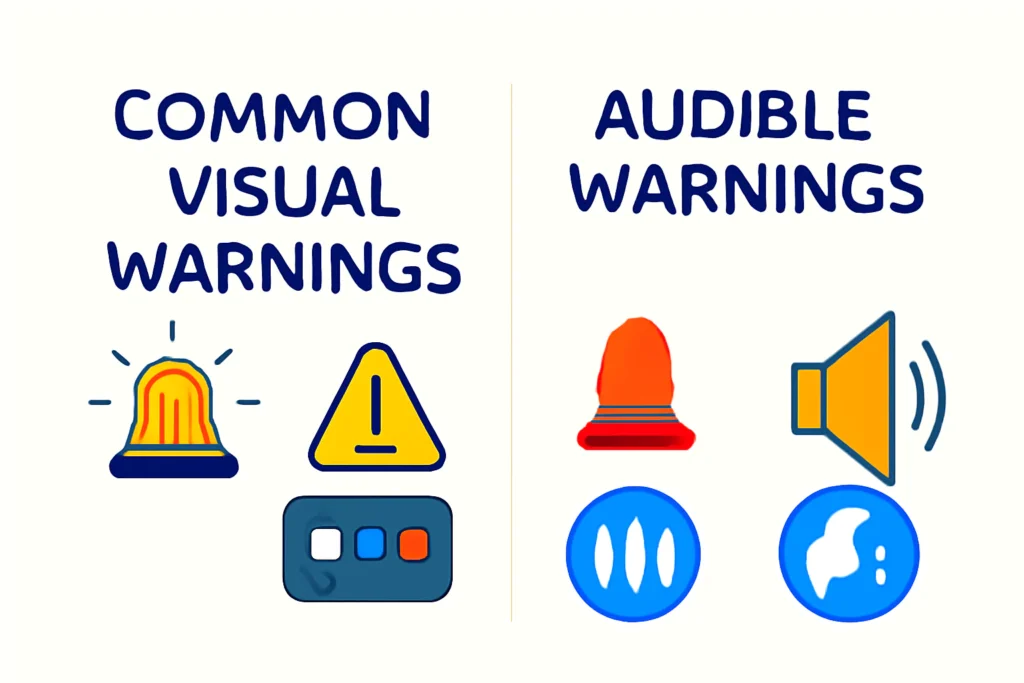
Visual and Audible Warnings of Electric Gates
How Can You Ensure Safety for Children, Pets, and Vulnerable Persons Around Electric Gates?
Children, pets, and vulnerable persons face higher risks around electric gates due to limited awareness, slower reaction times, and physical limitations. Automated gates move with considerable force, creating potential hazards if safety measures are inadequate.
Key risks include:
- Entrapment: Small children or animals may enter the gate’s path unnoticed.
- Crushing injuries: Vulnerable persons may struggle to move away from closing gates quickly.
- Unexpected movement: Automatic operation can surprise individuals unaware of the gate’s function.
To protect these groups, systems must include:
- Infrared photocells: Prevent gate closure if movement is detected in the path.
- Pressure-sensitive edges: Trigger immediate stop or reversal upon contact.
- Visual and audible warnings: Provide clear signals before and during operation.
Standards such as BS EN 12453 emphasise the need for enhanced safeguards where vulnerable users are present. Gates should operate at slower speeds, with extended detection zones and easily accessible emergency stops.
Property owners must ensure that children are supervised near gates, pets are restrained, and all users receive clear instructions on safe operation. Regular safety audits verify that all protective systems remain effective.
What Are the UK Safety Standards and Regulations for Electric Gates?
UK safety standards and regulations for electric gates exist to minimise the risk of crushing, trapping, or impact injuries. Compliance ensures that automated gates operate safely for all users, particularly in public and residential environments.
Key regulations include:
- BS EN 12453: Defines safety requirements for power-operated gates, concentrating on force limitation, obstacle detection, and emergency stops.
- BS EN 12445: Outlines testing methods to verify force levels and overall system safety.
- Supply of Machinery (Safety) Regulations 2008: Requires that installed gates meet essential safety standards before being placed into service.
Critical safety requirements address:
- Crushing and trapping prevention: Gates must automatically stop or reverse if an obstruction is detected.
- Force limitation: Systems must limit operational force to prevent injury.
- Emergency release access: Allows manual operation during faults or power loss.
Property owners, installers, and maintenance providers share legal responsibility for ensuring compliance. Failure can lead to severe legal consequences under The Health and Safety at Work etc. The Act 1974 or The Occupiers’ Liability Act 1957.
Regular risk assessments, documented maintenance, and certified installation help demonstrate due diligence. In the next section, we will explore best practices for ongoing safety maintenance and inspections.
Why Is Regular Maintenance Important for Electric Gate Safety Systems?
Regular maintenance is crucial to ensure electric gates remain safe and functional. Over time, components such as sensors, motors, and control systems can degrade, leading to potential safety hazards if left unchecked. Routine inspections help prevent accidents and extend the lifespan of the gate.
Key maintenance practices include:
- Sensor checks: Ensure infrared photocells and pressure-sensitive edges are clean, aligned, and functioning correctly. Misaligned sensors can fail to detect obstructions, increasing the risk of injury.
- Motor and control system inspections: Verify that motors operate smoothly and control panels respond properly. A malfunctioning control system can cause unexpected movements or failure to stop when required.
- Force testing: Regularly test force levels to ensure they stay within the limits specified by BS EN 12453. Incorrect force settings can lead to crushing hazards.
- Battery checks (for backup systems): Ensure backup power sources are functional, providing gate operation during power outages.
Maintenance should be conducted by a qualified professional, ensuring all safety features are tested and compliant with UK regulations. Keeping detailed records of all inspections and repairs demonstrates due diligence.
Frequently Asked Questions
- Automatic gates typically include infrared photocells, pressure-sensitive edges, force limitation, emergency release systems, and visual/audible warnings to prevent accidents.
Electric sliding gates must have obstacle detection, force limitation, emergency stop buttons, and comply with BS EN 12453 and BS EN 12445 to prevent crushing or trapping hazards.
Risk assessments for electric gates focus on potential hazards like entrapment, crushing injuries, electrical shock, and malfunctioning safety sensors, ensuring compliance with relevant safety standards.
Protect your gate by regularly maintaining sensors, motors, and control systems, testing force levels, cleaning sensors, and ensuring compliance with safety standards and regulations.